Neither East nor West, Islam Is Best

My father used to say, “Neither East nor West, Islam is best.” The older I get, the more I understand the wisdom in those words.
This is a post I have been thinking about for a long time. I have hesitated to write it because I know culture can be a sensitive subject. We love our cultures. They are part of our families, our memories, our traditions, and our identity. And for Muslims who are already trying to hold on to their faith in a world that may not always understand it, the last thing we need is to feel that our own culture is being attacked.
But I am not writing this to criticize Eastern or Western cultures, nor praise either one as better. I am writing this because I have experienced both.
Through my marriage, my family lineage, and the different countries and environments I have lived in, I have spent much of my life experiencing a mixture of Eastern and Western cultures. I have seen the beauty in both, and I have also seen the problems in both.
And that has taught me something important: we don't have to choose between East and West. As Muslims, our standard should be Islam.
We can appreciate the good in our cultures without making culture our deen. We can learn something beneficial from another culture without feeling that we are abandoning our own. And we can recognize that something we grew up with may simply be cultural, rather than Islamic.
That distinction is important.
The Beauty of the East
There is so much I love about Eastern cultures.
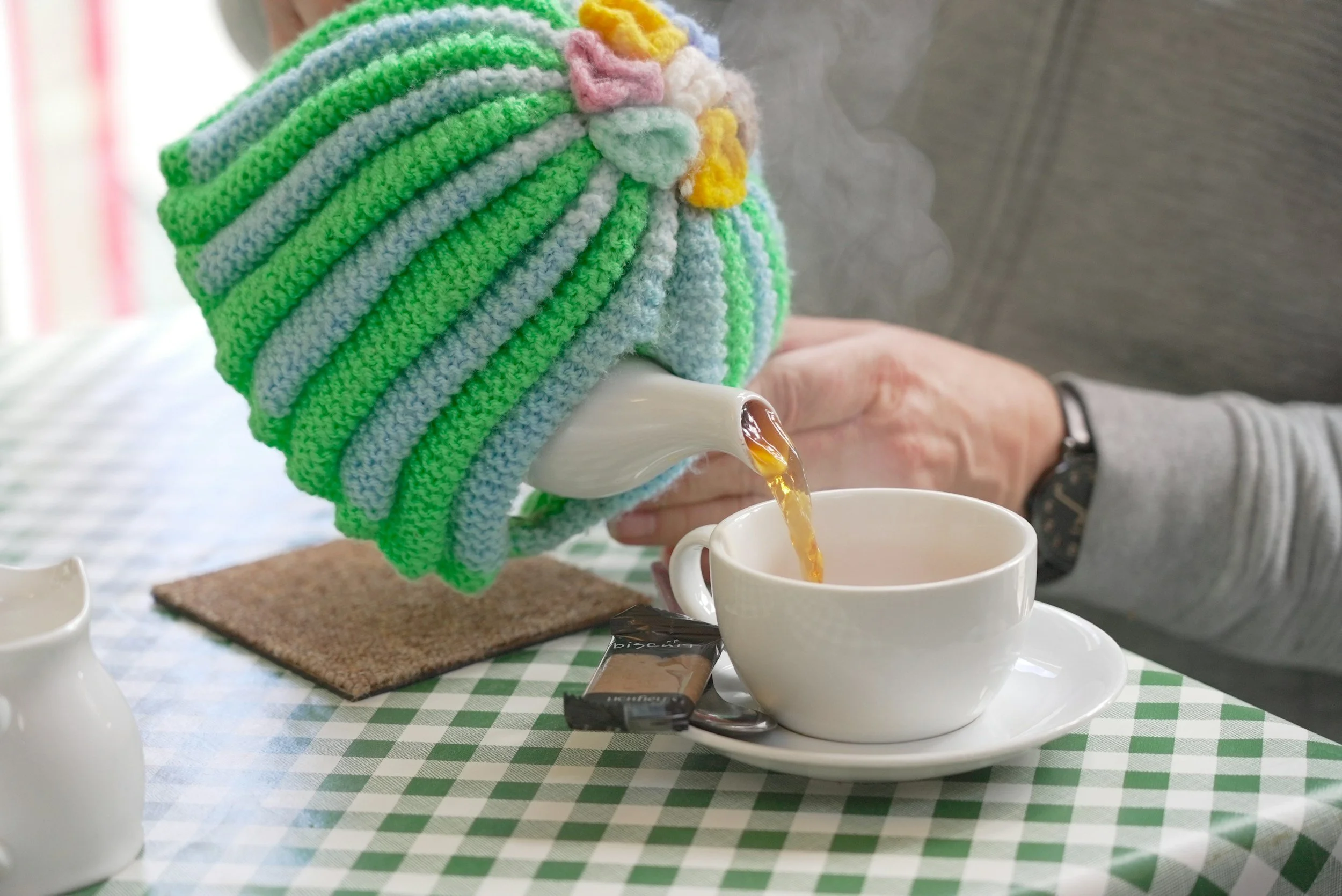
If you have ever been welcomed into an Eastern home, you probably know what I mean. You are fed before you even have a chance to say you are hungry. Tea appears almost immediately. You are encouraged to eat more even when you are completely full. Guests are treated with generosity, and family is often at the center of everything.
There is a warmth and hospitality that is beautiful.
Family ties are important. Elders are respected. People often feel a strong responsibility toward relatives and their community. There is a sense that we belong to one another rather than living completely separate lives.
These are beautiful qualities, and many of them are completely in keeping with Islam.
The Prophet SAW was generous, hospitable, merciful, and deeply concerned about the people around him. Islam teaches us to maintain family ties, care for our neighbors, honor our guests, and look after one another.
So I would never want us to lose these beautiful qualities simply because they are associated with Eastern culture.
But there are other habits that we have picked up along the way that we need to be willing to examine.
When Culture Becomes an Excuse
In some Eastern cultures, saying no can feel almost impossible.
We don't want to hurt someone's feelings. We don't want to appear rude. We don't want someone to think badly of us.
So we say yes when we really mean no.
We agree to something even though we know we probably cannot do it. We tell people what they want to hear instead of being honest about what we can actually give.
We may arrive late and simply laugh about it because, “That's just how we are.”
We may avoid giving honest feedback because we don't want to offend someone.
But we have to ask ourselves: Is this actually kindness? Is this actually Islam?
Being kind does not require us to be dishonest.
Being respectful does not mean we can never disagree.
Being hospitable does not mean making promises we cannot keep.
And being patient does not mean remaining silent when something needs to be addressed.
Sometimes we have taken a cultural habit and given it a religious explanation when it really has nothing to do with Islam.
For example, saying “no” respectfully is not unkind. In fact, it can be much kinder than saying yes and then failing to follow through.
Being on time is not a Western obsession. It is a way of respecting another person's time.
Giving honest feedback does not have to be harsh. It can be done with kindness and good intentions.
We need to stop assuming that everything our culture teaches us is automatically Islamic simply because we grew up with it.
What the West Gets Right
Having experienced Western culture as well, I have also learned to appreciate things that are sometimes missing in our Eastern communities.
Punctuality.
Direct communication.
Keeping your word.
Taking responsibility.
Being willing to say no.
Giving honest feedback.
Respecting other people's time.
These are good qualities.
And they are not “Western values” that Muslims need to be suspicious of. Many of them are qualities Islam already teaches us.
Allah SWT says:
“O you who believe, fulfil your obligations.” Surah Al-Ma'idah 5:1
The Prophet SAW also warned us about lying, breaking promises, and betraying trusts.
So if someone says they will do something and then repeatedly does not, that matters.
If someone makes a commitment they have no intention of keeping, that matters.
If someone wastes another person's time because they simply assume everyone will wait for them, that matters.
These are not merely cultural differences. Character matters in Islam.
At the same time, we should not make the mistake of thinking that everything Western is better.
What the West Has Lost
Western societies have developed many systems that are efficient and organized, but that does not mean they have everything figured out.
Individualism can become selfishness.
Independence can become isolation.
Freedom can become doing whatever we want without considering Allah SWT or our responsibilities toward others.
Families can become disconnected. Neighbors can become strangers. Elderly parents can become separated from their families.
And when the individual becomes the center of everything, a person can eventually lose sight of something very important: we were not created simply to live for ourselves.
Islam gives us a very different understanding of life.
We have rights, but we also have responsibilities.
We have individuality, but we are also part of families and communities.
We have freedom to make choices, but we are accountable to Allah SWT for those choices.
This is also why we need to be careful about adopting every modern idea simply because it is presented as empowerment.
Some modern ideas about women tell us that our worth comes from independence, achievement, or putting ourselves first.
Islam gives women dignity and rights, but our worth does not come from how successful we are, how independent we are, or how much we can prove that we don't need anyone.
Our worth comes from our relationship with Allah SWT.
That is a very different foundation.
Islam Was Already the Balance
This is what I find so beautiful about Islam.
Islam does not ask us to choose between warmth and honesty.
Between family and personal responsibility.
Between kindness and accountability.
Between generosity and keeping our word.
Islam gives us the balance.
Look at the character of the Prophet SAW.
He was the most generous, merciful, and gentle of people. He welcomed others. He cared for his family, his companions, his neighbors, and even those who treated him badly.
But he was also truthful.
He kept his promises.
He was trustworthy.
He corrected people when they were wrong.
He gave difficult advice when it was needed.
He did not avoid truth simply because it might make someone uncomfortable.
His gentleness did not make him weak, and his honesty did not make him harsh.
That is the balance we should be trying to develop in ourselves.
Gentle does not mean weak.
Honest does not mean harsh.
Patient does not mean silent.
Respectful does not mean agreeable.
Family-oriented does not mean that we have no boundaries.
Islam teaches us how to hold these qualities together.
When Culture and Deen Become Confused
I think this is especially important for Muslim women because many of us grew up with traditions and expectations that were presented to us as though they were part of Islam.
Some were.
Some were not.
Sometimes it takes getting older, learning more about our deen, and experiencing different people and cultures before we begin to recognize the difference.
We may discover that something we thought was Islamic was actually cultural.
Or we may discover that something we thought was “Western” is actually a quality Islam has encouraged all along.
That realization can be uncomfortable, especially when the cultural habit comes from our parents or grandparents.
But we have to remember that our loyalty is ultimately to Allah SWT.
We can love our parents.
We can love our culture.
We can love our traditions.
And still be willing to leave behind something that does not agree with Islam.
That is not rejecting our heritage.
That is putting our deen where it belongs.
Take the Good From Everywhere
I don't believe Muslims need to become Eastern or Western.
I believe we need to become better Muslims.
If another culture teaches people to be punctual, we can learn punctuality.
If another culture values honest communication, we can learn to communicate more honestly.
If our own culture teaches us hospitality, generosity, family loyalty, and care for our community, we should hold on to those things.
We don't need to label everything as Eastern or Western before deciding whether it is good.
We simply need to ask:
Does this agree with Islam?
If it does, keep it.
If it does not, leave it.
And we should be willing to apply that same question to our own culture.
It is easy to see the problems in someone else's culture. It is much harder to look at our own traditions and say, “Perhaps this isn't Islam after all.”
But that is part of being honest with ourselves.
We Are Muslims First
At the end of the day, I don't want East or West to be my standard.
I want Islam to be my standard.
Our cultures can be beautiful. Our families can have different traditions. We can come from different countries and backgrounds. We can enjoy different foods, languages, customs, and ways of doing things.
There is nothing wrong with that.
But culture should never sit above Islam.
And nationalism should never become more important than our identity as Muslims.
We are Muslims first.
That means we can keep the warmth, generosity, hospitality, family ties, and community spirit that are so beautiful in Eastern cultures.
And we can also learn the value of punctuality, honesty, responsibility, accountability, and respecting people's time.
Not because they are Western.
But because they are good qualities, and many of them are already part of the character Islam asks us to develop.
We don't have to reject one culture in order to appreciate another.
We simply need to become better Muslims.
I know that is what my father meant all those years ago:
Neither East nor West, Islam is best.
May Allah SWT give us the wisdom to recognize the difference between culture and deen, the courage to leave behind what does not belong to Islam, and the ability to take the good wherever we find it. May He help us develop the beautiful balance of our beloved Prophet SAW, a character that combines warmth with honesty, mercy with accountability, and kindness with truth, ameen.
Salam, I’m Zakeeya!
A Muslim wife, mother of six, author, and mentor dedicated to helping Muslimas find peace, purpose, and barakah in their everyday lives. Since 2011, I've been sharing practical Islamic guidance on wifehood, motherhood, homemaking, and spirituality to help women like you navigate life's challenges with more faith and less overwhelm. If this post resonated with you, I'd love to have you join our community and say salam, grab free Islamic resources in the Member Vault, and explore my books, journals, and mentoring—visit my About Page. May Allah bless your journey! 🤍