How To Worship and Enjoy Ramadan During Hayd (Periods)
In Ramadan, we often feel disheartened when our hayd approaches. We dread the days we’re unable to fast and pray—especially if they fall within the last ten days of Ramadan. During this blessed month, we don’t want to feel left out while everyone else seems to be reaping the rewards, nor disconnected from the spiritual sweetness that fills the air. We think, “But it’s Ramadan!” “It only comes once a year!”
As women, these feelings can feel heavy—especially when we are already tired, overwhelmed, or lonely.
But we must gently remind our hearts of the truth.
Hayd is a natural occurrence for a woman, and it should never be seen as an inconvenience or a flaw. A menstruating woman is not dirty; rather, she is only ritually impure for a specific period of time. This is a legal ruling, not a spiritual one. There is a difference.
A woman in hayd has been instructed by Allah to abstain from certain acts of worship as a mercy, not a deprivation. And every moment she obeys Allah’s commands—whether by acting or refraining—is itself an act of worship done for His sake.
Allah SWT, in His immense compassion, has given us alternative ways to draw close to Him. When we understand this, we stop seeing hayd as something that takes us away from Ramadan and instead recognize it as another door to Allah’s pleasure.
The feeling of being “left out” only arises when we are not engaging in the acts of devotion that are permitted during hayd. When your heart is alive with the remembrance of Allah, you will never feel distant from Him.
Allah says in the Qur’an:
“And when My servants ask you concerning Me, then surely I am near. I answer the supplication of the one who calls upon Me when he calls upon Me. So let them respond to Me and believe in Me, that they may be guided.” (Surah al-Baqarah: 186)
Our beloved Mother of the Believers, Ayisha (RA), said:
“We left with the Prophet SAW for the pilgrimage. When we were in Sarif, I began to menstruate. The Prophet SAW came to me while I was crying. He said, ‘Did you get your period?’ I said, ‘Yes.’ He said, ‘This is something Allah has decreed for the daughters of Adam. Do all the actions of Hajj except the tawaf.’” (Bukhari)
No healthy woman goes through life without hayd. It is a normal, natural part of womanhood. The Prophet SAW comforted Ayisha (RA) by reminding her that this is a matter Allah has written for women—completely refuting the idea that menstruation is a curse, punishment, or something shameful.
Ayisha (RA) also narrated:
“The Prophet SAW would recline in my lap while I was menstruating and he would recite the Qur’an.” (Bukhari)
“I would drink while menstruating and then pass the vessel to the Prophet SAW, and he would place his mouth on the same spot as mine and drink.” (Muslim)
“The Messenger of Allah SAW said to me, ‘Bring me the prayer mat from the prayer area.’ I said, ‘I am menstruating.’ He replied, ‘Your menstruation is not in your hand.’” (Muslim)
These narrations are filled with mercy, dignity, and reassurance. They teach us that a woman in hayd is not distant from Allah, nor from honor, nor from worship.
How to Participate in Ramadan While in Hayd
There are so many ways to enjoy Ramadan during hayd (periods) and remain spiritually connected:
You can perform wudu at each prayer time and sit in your usual place of worship.
You can make dhikr for the length of time you would normally pray, so your rhythm of worship remains intact.
You can listen to the Qur’an, reflect on its meanings, and allow your heart to soften—even cry.
You can send abundant salawat upon our beloved Prophet SAW.
You can spend intentional, loving time with your family for the sake of Allah SWT.
You can attend religious talks, lectures, and classes.
You can read about the righteous and sincerely ask your Lord to make you among them.
You can make dua for anything your heart desires or wants solved.
You can seek forgiveness and beg Allah SWT for pardon.
You can serve others and participate in your local community.
You can attend masjid iftaars and help mothers with young children.
You can reflect on your life and thank Allah SWT for every blessing, seen and unseen.
You can guard your tongue from backbiting and slander.
You can speak with kindness, intention, and purpose.
You can lower your gaze and avoid what is unlawful.
You can stay away from arguments and unnecessary conflict, especially with your husband and parents.
You can protect your time from being wasted.
You can seek beneficial knowledge.
You can give charity in any form you are able.
You can call or visit elderly family members or friends and offer care.
The Prophet SAW said:
“The people of Paradise will not regret anything except the hour that passed them by in which they did not remember Allah.” (Saheehul-Jaami’ 5446).
Alhamdulillah, there is truly no reason to feel left out. Ramadan is vast, generous, and full of doors to Allah’s mercy—whether we are fasting or not.
So let us ask Allah SWT to grant us the strength, sincerity, and presence of heart to worship Him in every state and to allow us to taste the sweetness of Ramadan in hayd and out of hayd, ameen.
Salam, I’m Zakeeya!
I believe that making our homes a safe haven for our families, as well as being a wife and mother, brings us great blessings, contentment, and benefits to society as a whole. Since 2011, I've been dedicated to assisting Muslimas in finding tranquility in their roles, taking better care of themselves, and achieving inner peace. Our journey in this world is not an easy one, but I pray the tools and guidance I offer will help you face life's challenges with more gratitude and mindfulness. Join me as I share wifehood, motherhood, homemaking, and lifestyle solutions that make life more fulfilling for you as a woman! Read more about me here.
Make Your Ramadan Run Smoothly!
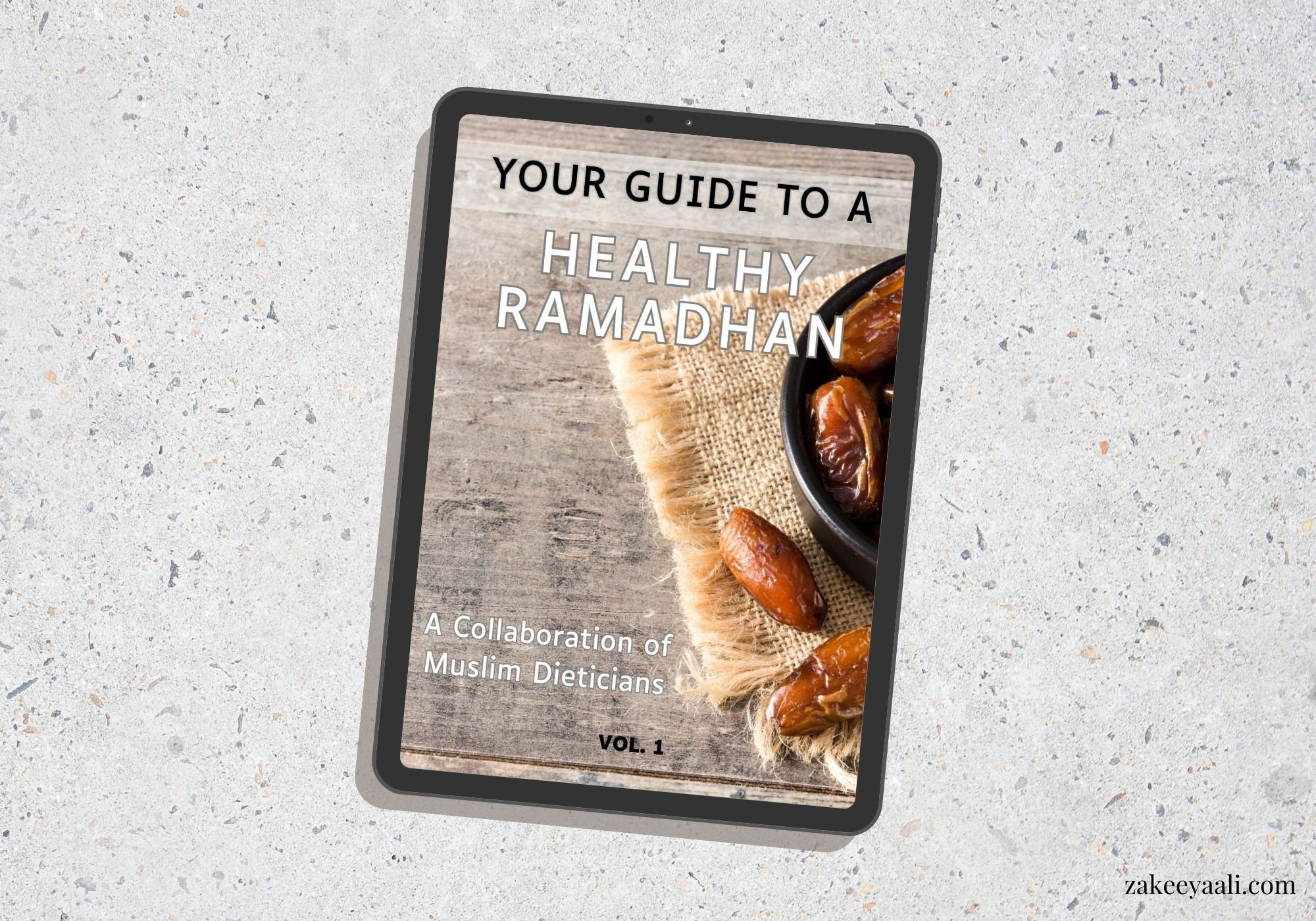
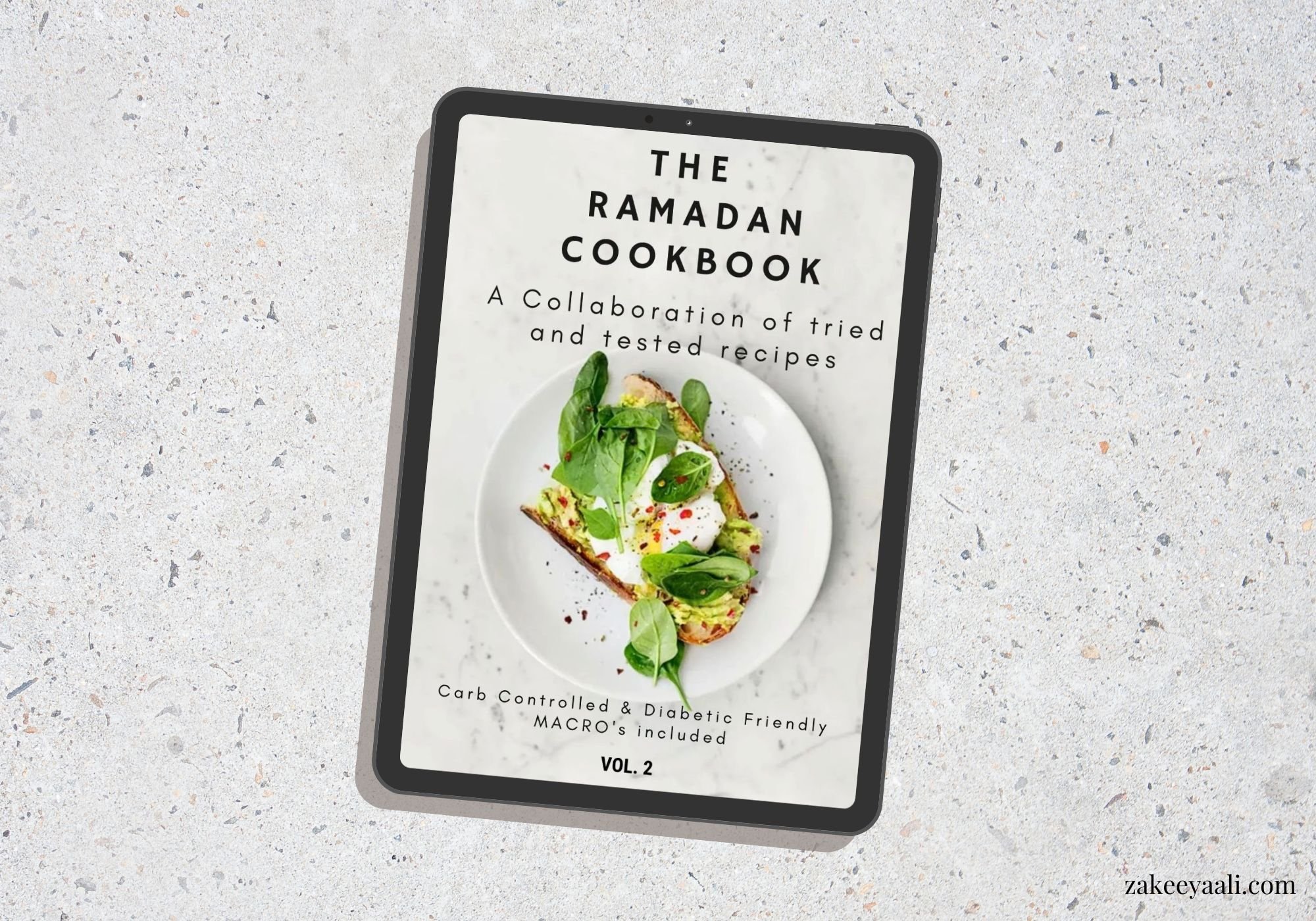
Get Your Guide to a Healthy Ramadhan, a 135-page guide including 100+ recipes for Ramadan, and The Ramadan Cookbook, a 70-page cookbook filled with healthier options for recipes with less badness and more goodness! Plus, when you buy one book, you’ll get 33% off the second book.