How To Deal With Headaches In Ramadan (and Even Out)

I’m a headache sufferer… and when Ramadan comes around, I get nervous. I know that I’ll suffer from migraines for the first few days, and my headaches can get so bad that I feel nauseous. In Ramadan, after breaking my fast, the pain would intensify, and regular painkillers would not help relieve it. I’d need to go to my bedroom in pitch darkness and sleep it off.
If you are a headache or migraine sufferer, you’ll know how debilitating it can be—I wouldn’t wish it on my worst enemy.
I’ve done a lot of research on migraines in general and on headache prevention in Ramadan, so I have many theories on why some of us get them and what helps relieve them. I hope the suggestions I share in this post will help if you’re someone whose headaches affect your daily life.
Some Relief Methods I’ve Discovered
Exercises for migraines
Stopping caffeine
Taking painkillers at suhoor time
Abstaining from certain types of foods
Here are my results from these methods
The exercises did help by releasing tension and taking the edge off my migraines, but they didn’t make them go away. Also, when you’re in the middle of a migraine, you don’t want to do anything hectic. On top of that, the exercises were time-consuming, so they were far from a quick fix.
I did find a strong link between coffee and headaches due to caffeine. This year, outside of Ramadan, I slowly reduced my coffee intake from two cups a day to one or two cups a week, a month before Ramadan began. My body adjusted outside of Ramadan, and I noticed my headaches would return whenever I had more coffee. This was a clear indicator for me. The following Ramadan, I only had one migraine—and that was on the first day.
As for taking painkillers at suhoor, they only helped if I took strong ones. A friend suggested I try Advil, as it was the only thing that helped her. I tried it, and it did help, but I didn’t feel comfortable relying on strong painkillers long-term because of the side effects. I also didn’t like the idea of taking pills preemptively in case I didn’t even get a headache that day.
I also learned that waiting too long to take medication can make it significantly less effective. Doctors recommend taking ibuprofen, for example, as soon as you feel a headache starting to prevent it from becoming “entrenched” and harder to treat.
Some Breakthroughs I’ve Discovered
Through extensive research and personal trial, I found a few natural methods that were genuinely helpful:
Taking magnesium supplements and eating magnesium-rich foods beforehand.
Placing an ice pack on your head or using a cold eye mask, depending on the type of headache.
Pressure points for headache relief, such as pinching the skin between the forefinger and thumb or gently pressing both earlobes.
Massaging the temples, neck, and shoulders using oil with essential oils known to help with headaches, such as peppermint.
I also discovered a method shared by my favorite naturopath, Barbara O’Neill, that surprised me. It involves placing your feet in hot water while applying a cold compress to the head. The idea is that the heat draws blood downward while the cold reduces pressure in the head. I tried this method, and it did help lessen the intensity of my headache.
Here’s the Cherry on Top
My 10-year-old son loves learning about science and the human body, alhamdulillah. One day, as I lay in bed with a cold mask over my eyes and asked him to bring me painkillers, he suggested I eat 15–20 almonds instead. He said he had learned that it was equivalent to taking two painkillers.
Of course, I didn’t believe him—how could he know such a thing when I had never heard of almonds helping headaches in all my research? But I was desperate and in pain, so I tried it.
And subhanallah… it worked.
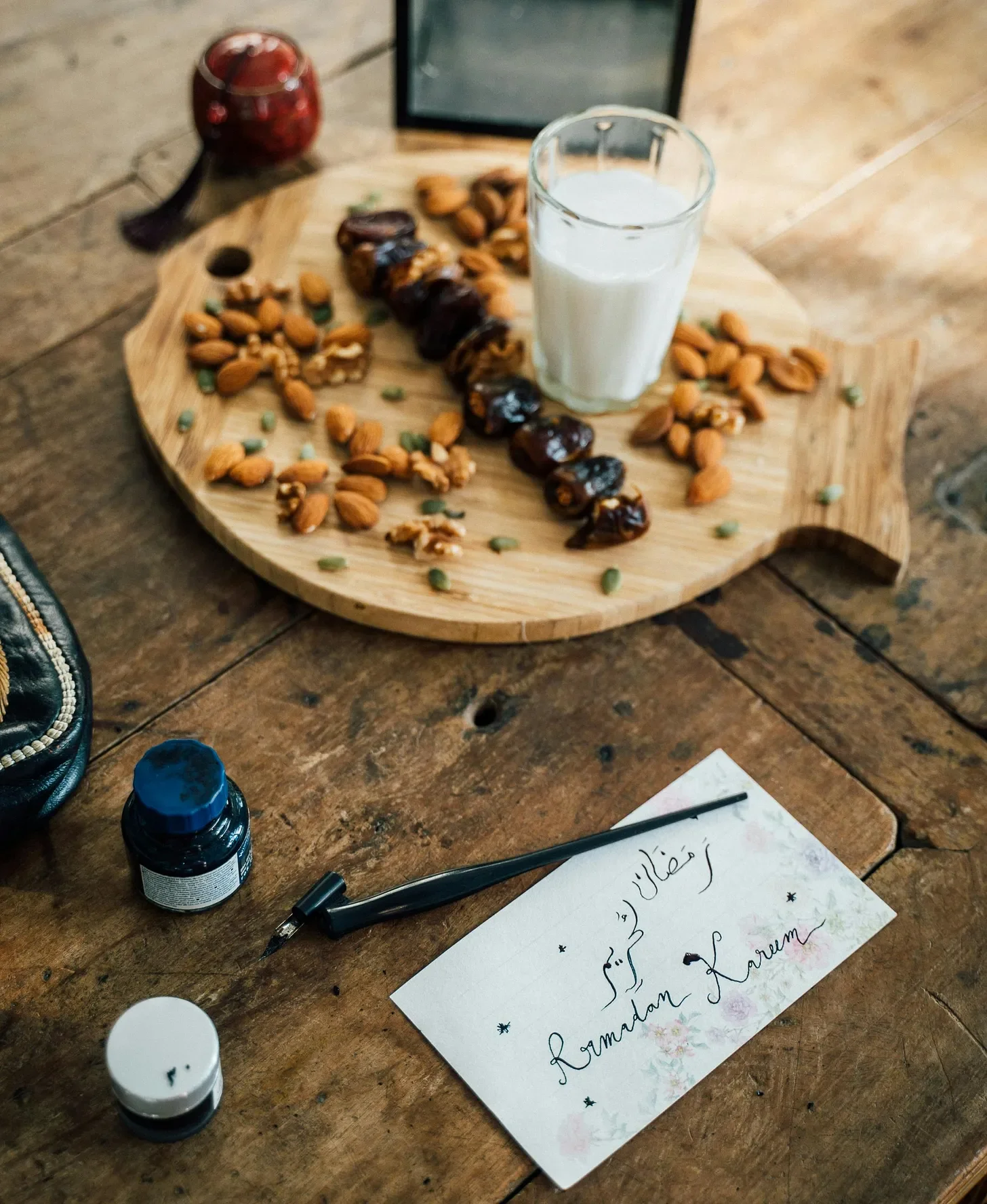
I later researched almonds and headaches and found that they can help relieve headaches or reduce the frequency of migraines for some people. Almonds contain salicin, which is a natural compound related to aspirin. They also contain magnesium, the anti-stress mineral that relaxes muscles and nerves and is especially beneficial for tension headaches.
Because almonds are also a Sunnah food, I felt even more encouraged to share this. And on another note—keep your kids reading good books. They really do learn so much. :)
A Double Cherry on Top
Days after writing this post, I came across another important reminder that I felt compelled to share.
A scholar speaking about healing with the Qur’an mentioned that a cure for headaches is to place your hand on your forehead and recite Surah Al-Fatihah.
Alhumdulillah, I tried this, and it did work—of course it would. I truly believe it works because you believe that Allah SWT will cure you as you recite His words. The Qur’an is a miracle and a source of healing for us.
Natural Vitamins That May Help With Headaches
From my research and experience, the following have been helpful for some people:
Magnesium
Vitamin B2 (riboflavin)
Omega-3 fatty acids
Vitamin D (especially if deficient)
Other Headache Relief Suggestions Shared by Readers
I asked readers to share what helped them, and they suggested:
Staying properly hydrated (dehydration is a big culprit).
Maintaining good sleep patterns.
Identifying food triggers such as gluten or dairy.
Checking for hormone imbalances.
Reducing stress, which is a major and often overlooked factor.
Taking magnesium together with vitamin B2, rather than magnesium alone.
Now you have several natural ways to help with headaches and migraines during and after Ramadan. I pray that one of them brings you relief—or, by the permission of Allah, a cure.
Please note that this post is based on my personal experience only. It’s always best to confirm medical information with a healthcare professional or, even better, a naturopathic doctor.
Some Natural Product Recommendations That Promote Headache Relief
Salam, I’m Zakeeya!
I believe that making our homes a safe haven for our families, as well as being a wife and mother, brings us great blessings, contentment, and benefits to society as a whole. Since 2011, I've been dedicated to assisting Muslimas in finding tranquility in their roles, taking better care of themselves, and achieving inner peace. Our journey in this world is not an easy one, but I pray the tools and guidance I offer will help you face life's challenges with more gratitude and mindfulness. Join me as I share wifehood, motherhood, homemaking, and lifestyle solutions that make life more fulfilling for you as a woman! Read more about me here.
Do You Need Support as a Sister?
If you are struggling in your life and need professional support for personal development, you can book a one-on-one mentoring session with me to get tailored advice.

Make Your Ramadan Run Smoothly!
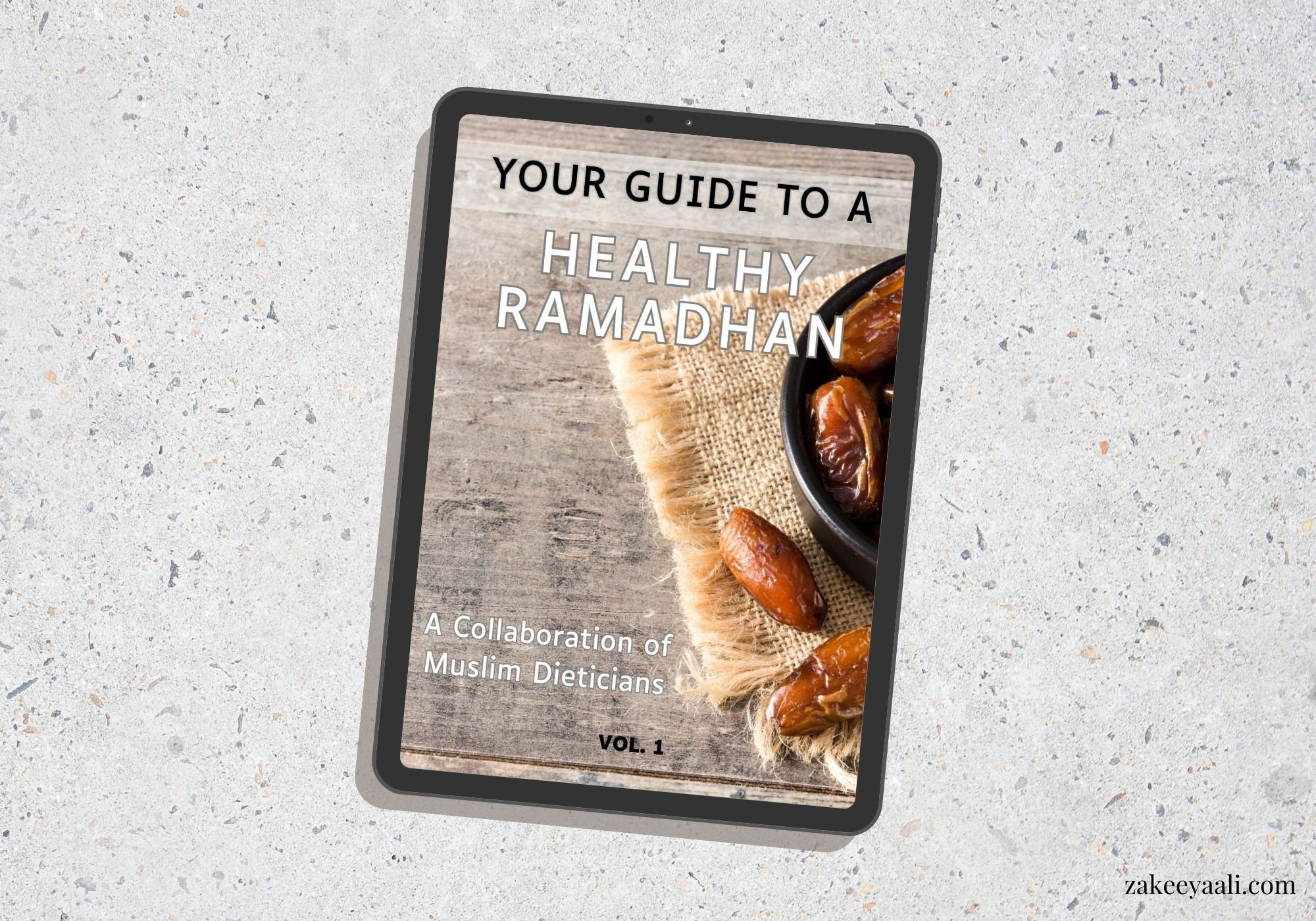
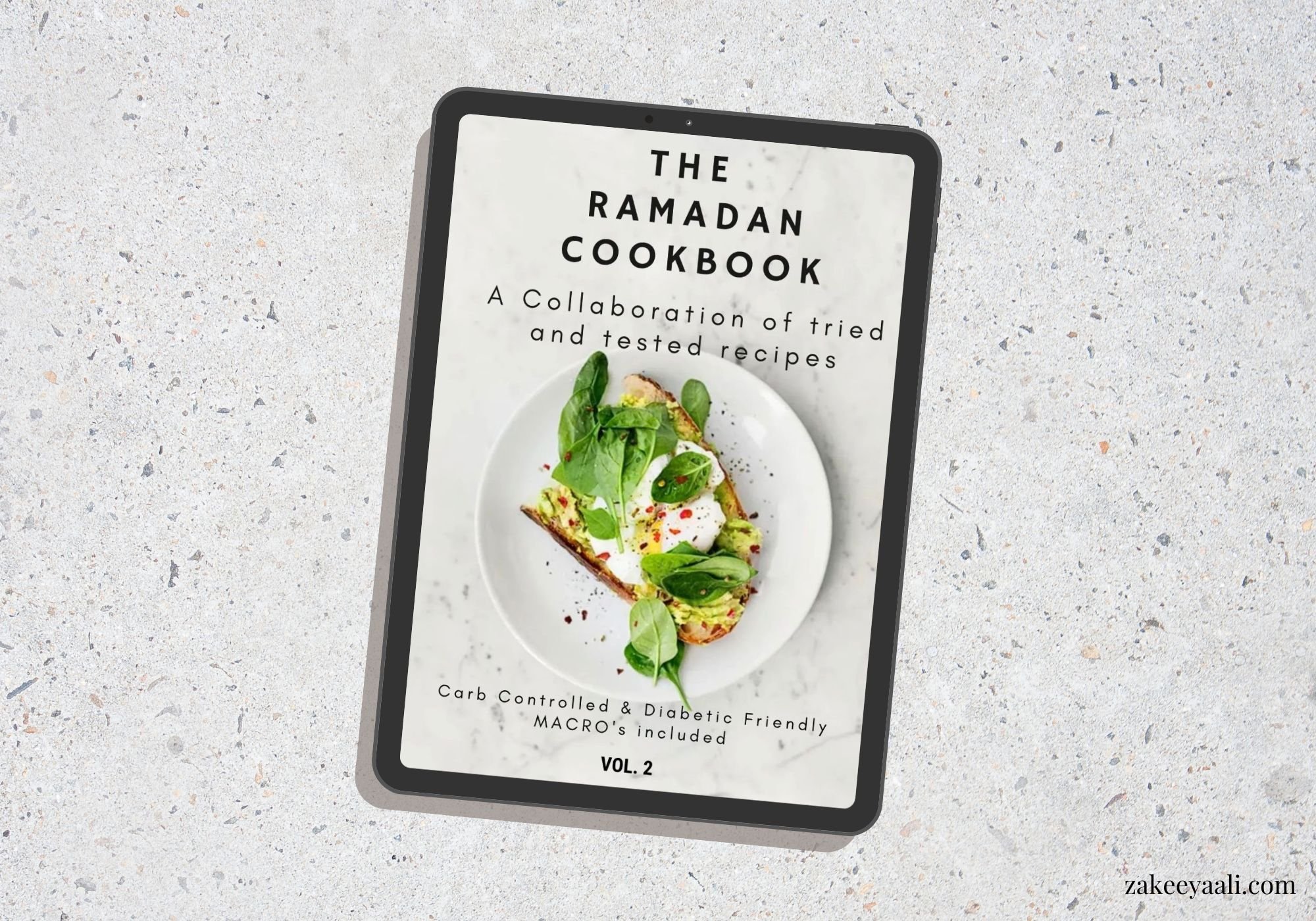
Get Your Guide to a Healthy Ramadhan, a 135-page guide including 100+ recipes for Ramadan, and The Ramadan Cookbook, a 70-page cookbook filled with healthier options for recipes with less badness and more goodness! Plus, when you buy one book, you’ll get 33% off the second book.
Do You Want to Instill Your Daily Dose of Dua?
Order my handy dua ebooks, which are available in an Arabic/English or English only version, and contain 100 authentic duas to say for protection and during hardship.