Simpler Ways To Achieve Your Ibadah Goals in Ramadan as a Busy Mom

As mothers, our circumstances are unique. Our time, energy, and attention are often divided, yet Allah SWT has not left us without ways to remain connected to Him. There are many practical and realistic ways to nurture our iman, both in Ramadan and throughout the year, without falling into despair or burnout.
1. Understand Your Circumstances
The first step is to remove despair from your heart. Raising the future ummah is an excellent act of ibadah. Our Lord gave us an amanah to raise servants of Allah, and He SWT knows exactly what we are capable of and what our limitations are. He knows our circumstances, our responsibilities, and our restrictions.
So as mothers, we should not be hard on ourselves. Instead, we should be realistic and renew our intentions daily: to be good wives, to raise our children well, and to remember that everything we do is for the sake of Allah SWT.
2. Steadily Increase Your Worship Consistently
Maybe you won’t complete the entire Qur’an or pray twenty rak‘ats of tarawih every night, and that’s okay. However, increasing your worship is still very doable. Indeed, Allah loves what is consistent, even if it is small.
Make smaller efforts for yourself each day that are reasonable and easy to maintain, even on difficult days. The goal is consistency and long-term growth, not short bursts of worship that quickly fade.
Be aware that one of Shaytan’s tactics is to make us overload ourselves in worship. He wants us to later believe that we are incapable of being good Muslims, which results in giving up or losing hope altogether.
3. Seize Your Opportunities by Being Organized
Organization helps us use the time we already have more effectively. Have a schedule and assign blocks of time in your day. For example, when your child naps at 1 p.m., you can take a few minutes to recite the Qur’an. After their assigned bedtime, you can pray a few rak‘ats of tarawih.
You can read a seerah book while nursing or rocking your child to sleep, or substitute an Islamic podcast for the time you usually spend scrolling on social media.
4. Increase Your Dhikr During The Day
There are acts of worship that don’t require isolation, silence, or long stretches of focus.
Dhikr can be done almost anytime, and you can increase your dhikr by simply saying “Alhamdulillah, Subhanallah, and Allahu Akbar” while you do tasks. You can even say it out loud so your children can hear and learn from your example.
This is especially helpful while driving your kids around, washing dishes, cooking, or doing menial household chores.
5. Multiply Your Intentions
A friend once gave me this tip, and it stayed with me: you can multiply your good deeds by multiplying your intentions.
In Islam, actions are judged by intentions. This means that if you sincerely intend an action, even if you don’t get to accomplish it, you will still be rewarded as if you did.
Through the mercy of Allah SWT, every act we engage in can become a form of ibadah. The pious would not even have a drink without attaching intentions for the sake of Allah SWT.
6. Increase Good Deeds Within Your Capabilities
Increasing good deeds does not have to be complicated. You don’t need to volunteer at a soup kitchen. Simply make extra food and share it with a neighbor or a friend in need. Pick up an extra bag of rice to donate to a food pantry or masjid. Call relatives to strengthen kinship ties.
Make a conscious effort to smile more, be pleasing to your husband, and have more sabr with your children.
7. Worship by Spending Time With Your Family
Instead of seeing your children as a preventative element to worship, see them as a golden opportunity to instill love and longing for worship in their hearts.
Don’t feel that you’re ignoring them when you pray. As long as their needs are met, they are watching you, and this is the most influential way to raise devout worshippers.
Remember: children will do as you do before they do as you say. If you can, involve your children in what you’re doing:
Sit in the living room and make dhikr with them.
Have a short and cozy halaqa together.
Recite the Qur’an out loud to them, or read verses together in your first language so they understand.
Ask them to pray with you in jama‘ah.
Brainstorm ways to do charitable acts together, even toward their siblings.
Depending on your children’s ages, you can also create special family moments:
Have a moon-sighting night before Ramadan begins and before Eid.
Have dua moments together at the table before iftar, as this is one of the times when duas are most accepted.
Make it exciting by telling stories of the sahabah or playing those stories on YouTube or as podcast episodes during afternoons when fasting is more strenuous.
My kids love Islamic quizzes as a family, and my husband makes it competitive so they win prizes on weekends.
I urge wives and mothers to be more loving and generous with their husbands and children as a form of charity. Ramadan should be filled with joy and good memories.
8. Adopt Simpler Practices
If you like to decorate your home, keep it very simple. We use a banner, lights, and a wreath that we bought once and reuse every year. We only change them when they break, because Ramadan should also be a time of promoting less waste—a practice that is ibadah in itself.
Invite families who inspire and strengthen your iman. Let your children play together while you remember Allah SWT together in a khatam or dhikr gathering, and break fast together with a potluck, so the catering is not all on your shoulders. Eating together and hosting give extra rewards as well.
9. Try Journaling For Yourself and Your Kids
I find journaling to be an easy way to learn the deen and understand verses of the Qur’an and hadith. I write a verse of the Qur’an, reflect on it, and jot down what stands out. I do the same with hadith. I also write my duas in a journal so I don’t forget what to ask when it’s time to supplicate.
For teens and older children, using a gratitude and Ramadan journal helps them stay motivated and accomplish goals they might not reach without a planned structure.
A Smarter Way to View Ramadan
We should aim to maintain consistent ibadah throughout the year and use Ramadan to set new goals that we intend to continue afterward. This way, it doesn’t feel like all our eggs are in one basket or that in Ramadan we have to become this exceptional Muslim.
I personally take Ramadan as a time of rejuvenation, a chance to build self-discipline, and to finally start goals I usually put off, such as praying tahajjud since I’m already waking up for suhoor anyway.
We should also constantly work on our sincerity by checking, rechecking, and renewing our intentions in all that we do. Remember, Allah SWT knows our struggles, and He tells us in the Quran:
“Allah does not burden a soul beyond that it can bear” (Surah Al-Baqarah, verse 286)
Sheikh Belal Assaad has explained this verse in his talk on YouTube:
“A lot of people misunderstand that verse. They think that you will not go through a trial and suffering beyond what you can handle. That is not the correct interpretation. You will certainly go through trials, sicknesses and trial tests around your life… The meaning of the verse is in the times of hardships and within your capacity, Allah does not hold you accountable for more than what you could handle. Again, no matter what happens to you in life, anything beyond your ability, Allah will not hold you accountable to it.” (Sheikh Belal Assaad)
Salam, I’m Zakeeya!
I believe that making our homes a safe haven for our families, as well as being a wife and mother, brings us great blessings, contentment, and benefits to society as a whole. Since 2011, I've been dedicated to assisting Muslimas in finding tranquility in their roles, taking better care of themselves, and achieving inner peace. Our journey in this world is not an easy one, but I pray the tools and guidance I offer will help you face life's challenges with more gratitude and mindfulness. Join me as I share wifehood, motherhood, homemaking, and lifestyle solutions that make life more fulfilling for you as a woman! Read more about me here.
Make Your Ramadan Run Smoothly!
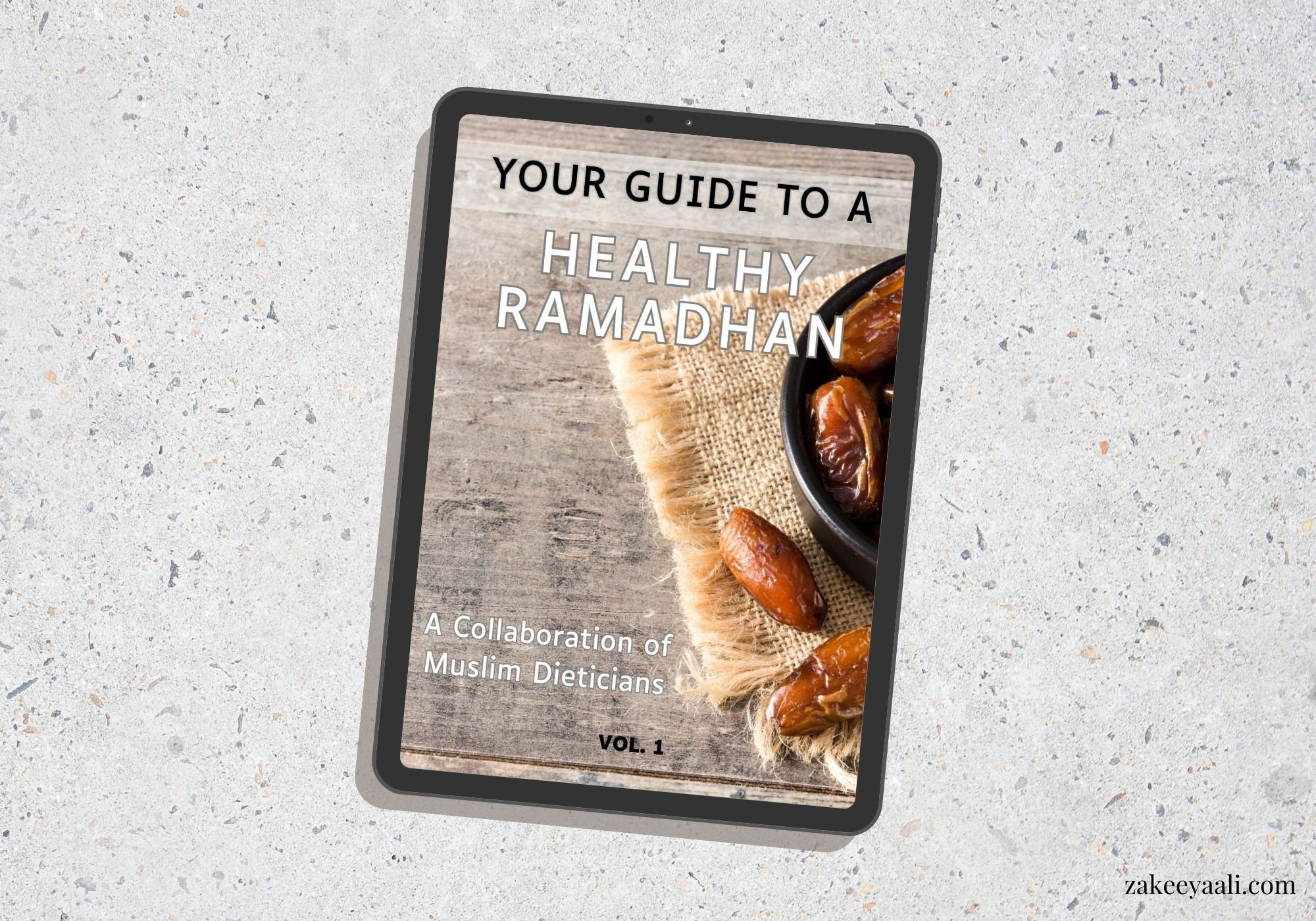
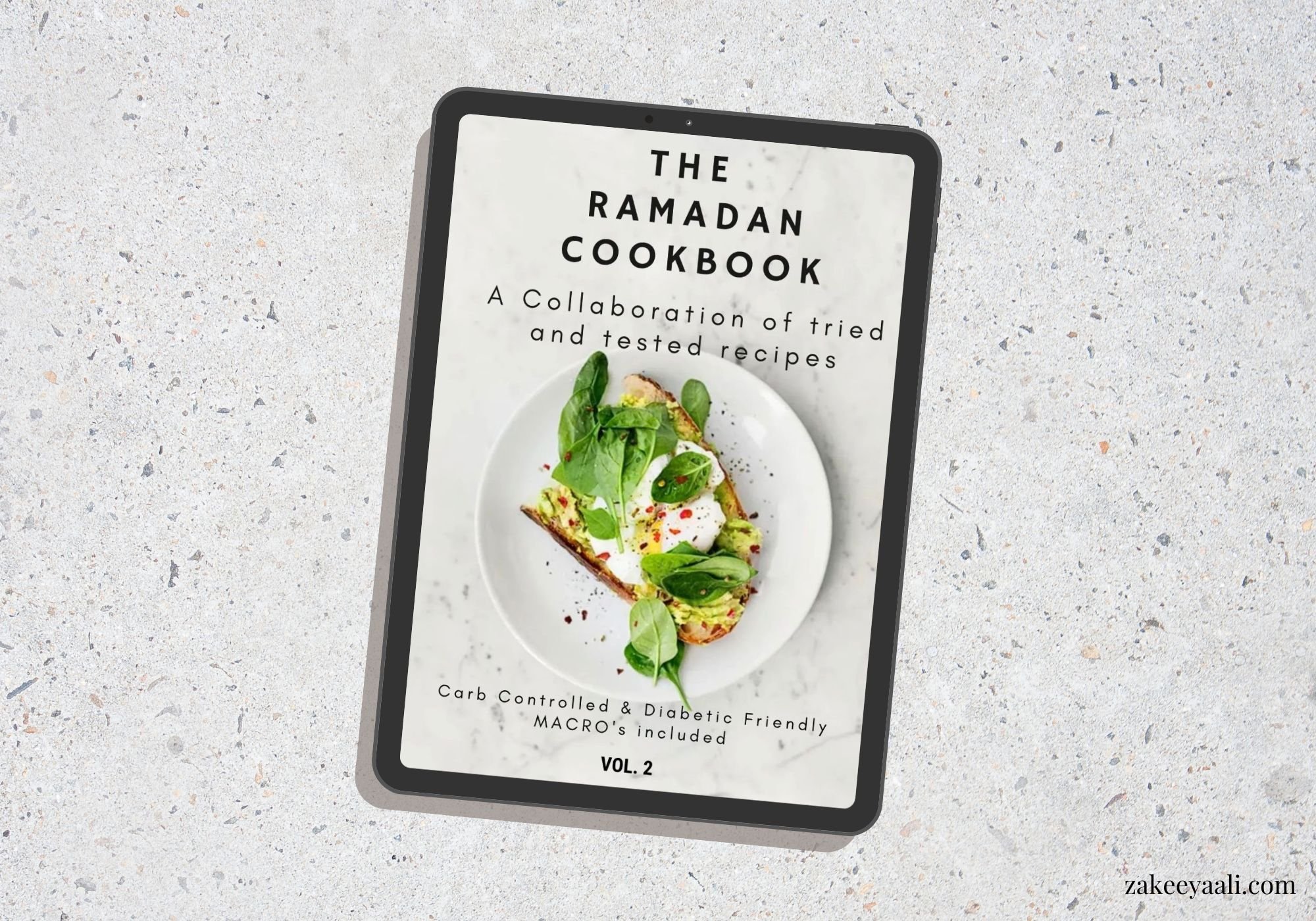
Get Your Guide to a Healthy Ramadhan, a 135-page guide including 100+ recipes for Ramadan, and The Ramadan Cookbook, a 70-page cookbook filled with healthier options for recipes with less badness and more goodness! Plus, when you buy one book, you’ll get 33% off the second book.