
10 Ways To Welcome Ramadan With Young Children
Ramadan naturally brings changes to our routines. Sleep schedules shift, days feel longer, and energy levels fluctuate. With young children, this can feel especially challenging.
During Ramadan, our family intentionally slows things down. We do fewer strenuous activities and focus more on reading, crafts, and calm, meaningful time together.
Bedtime stays the same for our younger children, but our older kids, who are fasting, are allowed to stay up longer to pray and enjoy time with Mom and Dad. This makes fasting extra special, and they feel a bit more grown-up.
Ramadan, along with the two Eids, is a big celebration in our home because we don’t make a fuss about birthdays. Whenever possible, we take our children on a moon-sighting drive for both the start of Ramadan and the start of the two Eids. Searching for the crescent moon helps them feel the significance of these occasions and develop fond memories.
It is good to set traditions with your kids, as these times will stay with them into adulthood and be passed on to their own children one day, inshallah.
Below are ten more suggestions to welcome Ramadan with young children that are meaningful and hopefully doable for most families.
1. Decorate a Central Area of the Home
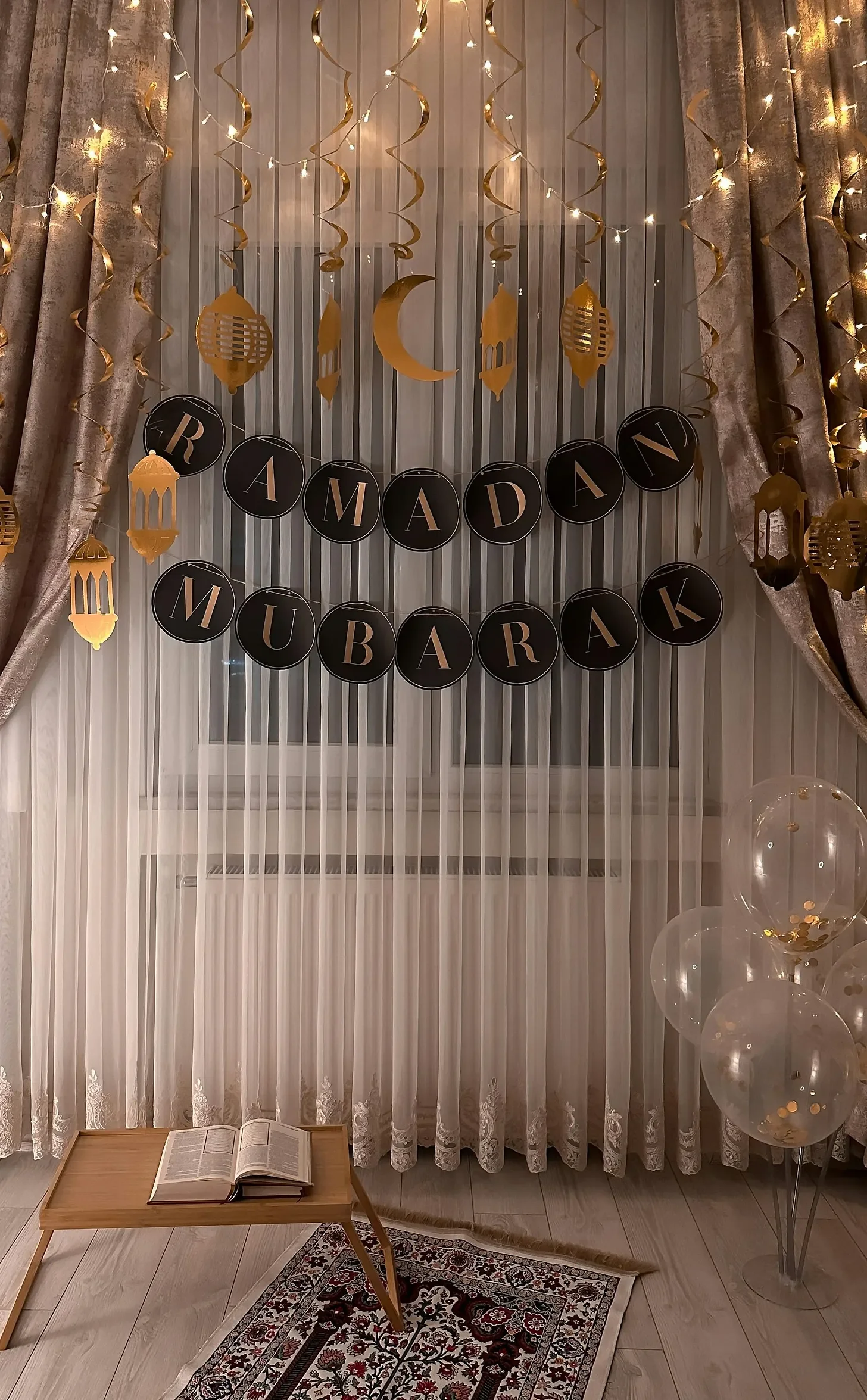
We usually decorate one main area rather than the entire house. Over the years, we’ve done this in different ways, sometimes with store-bought items, sometimes with homemade ones.
One Ramadan, we bought balloons and let each child inflate and decorate a balloon with their name. We strung them together using dental floss and paired them with a simple banner, lights, and tinsel. Another year, we made a homemade “Ramadan Mubarak” banner using colored paper, letting each child draw and decorate the letters.
Today, there are many affordable, ready-made options available online for families who prefer less fuss. Whether handmade or store-bought, the goal is not perfection but participation and excitement for your kids.
2. Create Ramadan Booklets
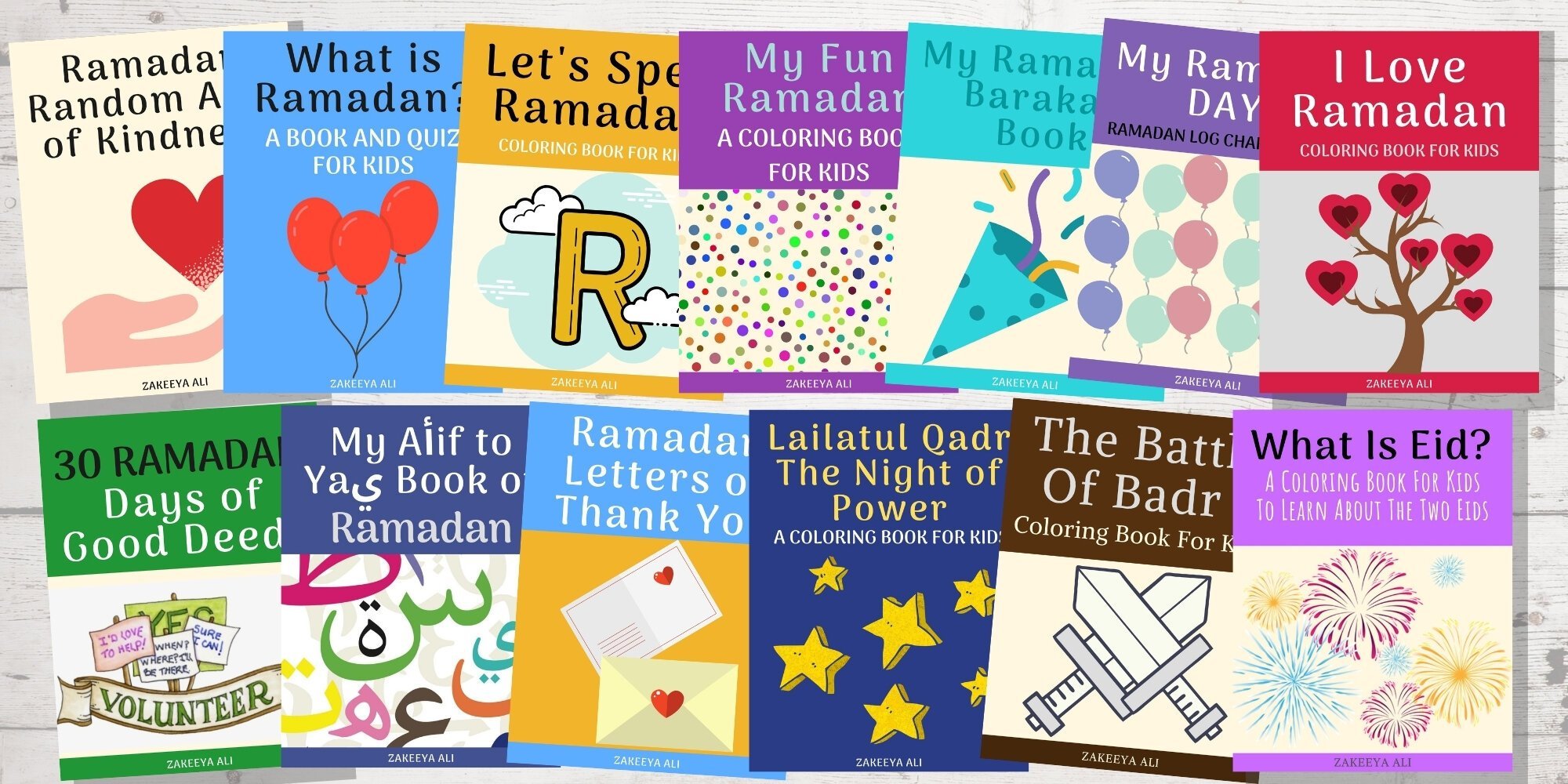
I designed and printed for my kids some Ramadan coloring and activity pages and stapled them into simple booklets for them to work on throughout the month. They would color or decorate a page or two each day. I offer these Ramadan pages in ebooks, which you can get for free during Ramadan.
For my older children, I included lined pages with prompts so they could journal their Ramadan experiences. Over time, this led me to create paperback Ramadan journals for Muslim families to help their kids stay engaged and motivated.
3. Do Simple Crafting
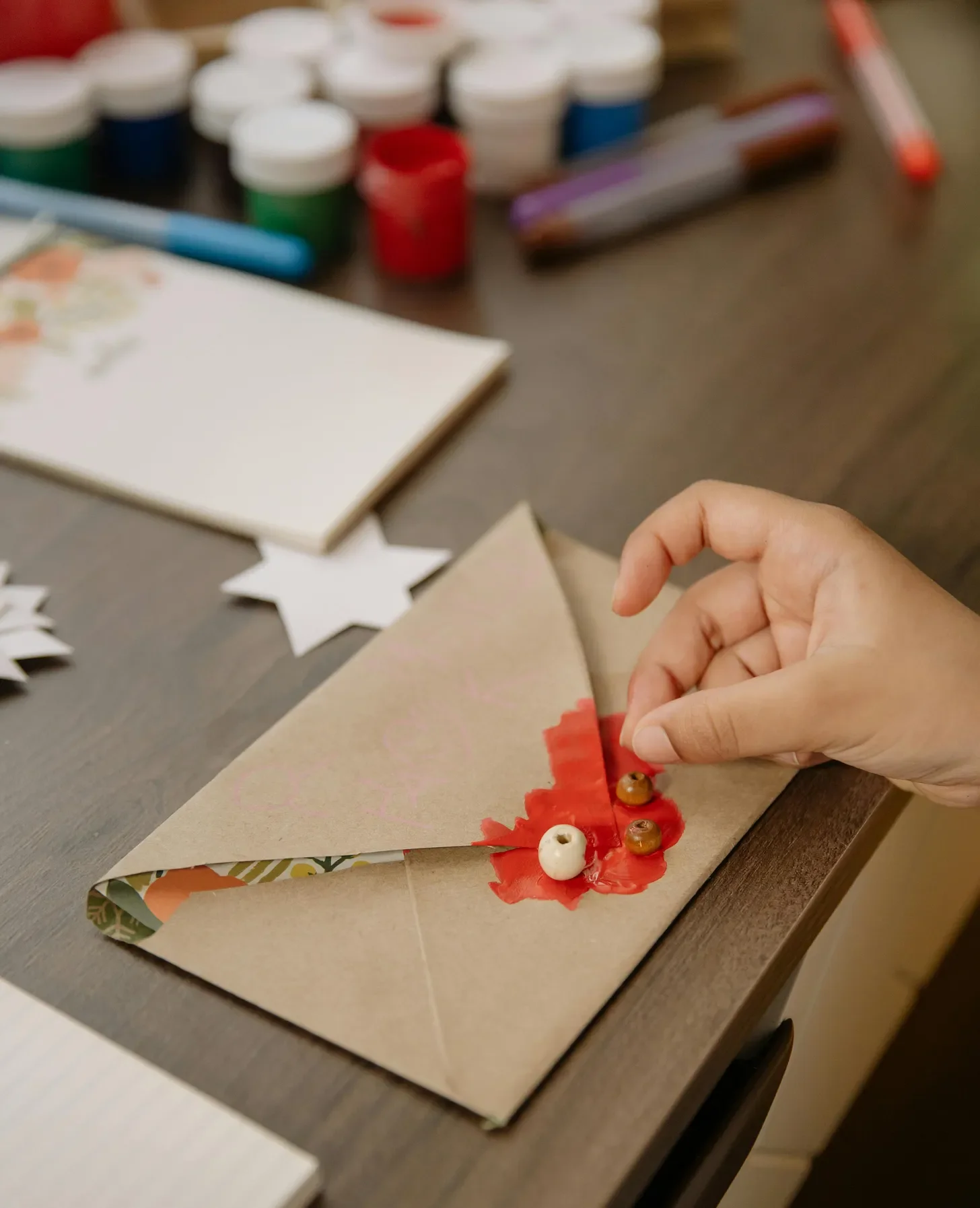
During Ramadan, I try to do something creative every day with my young kids, even if it’s short. Painting, calligraphy, clay molding, photo collages, coloring, puzzles, or simple cooking activities all work well.
I usually lay a plastic cloth on our kitchen table and secure it with binder clips so my children can create freely without stressing about being messy.
Giant floor puzzles and jigsaw books are also some of my kids’ favorites, especially in the afternoons when fasting feels more challenging and I am in the kitchen cooking.
4. Read Stories and Track Ramadan Goals
We read a lot of Ramadan and Islamic storybooks on a daily basis. You can find many Eid and Ramadan books for sale. My children also enjoy Ramadan poems and will sometimes memorize them and perform a recital when their father comes home.
Older kids can track their goals in a Ramadan planner, and younger kids can use a Ramadan chart to record their fasting progress. When kids reflect on their days, it helps them feel involved rather than passive observers.
5. Make Ramadan Chains
My children love to make Ramadan candy chains by using a handheld hole punch to make a hole in mini candy bags and attaching them to a long piece of string.
After iftar, each child pulls one candy bag at the end of the day. Since we limit giving our kids candy outside of Ramadan, this feels like a big treat and helps my kids also track their fasts.
For families who prefer alternatives to giving candy, you can replace it with notes, stickers, or small gifts. The purpose is to mark the days in a fun way and help children feel that Ramadan is a special occasion.
6. Do Ramadan Quizzes
Before iftar or when Dad gets home, we try to do a short circle time. My husband often finds basic Ramadan or Islamic quizzes online, but you can also use books. He asks the kids questions, and they have to raise their hands to answer.
We keep it light and encouraging, rewarding effort as much as correct answers. Some days it happens, some days it doesn’t, but my kids love this connection time with their father.
7. Listen to the Qur’an Recitation and Ramadan Nasheeds
We play lots of Qur’an recitation in Ramadan, but also out of Ramadan, so my kids are used to this and even memorize surahs this way. They will listen during crafts, puzzles, or quiet time, especially.
We will also listen to Ramadan and Islamic nasheeds, especially when driving somewhere or to wind down at the end of a busy day.
8. Dress-Up and Practice Good Etiquette
Our children enjoy wearing nicer clothes in Ramadan if they wish, as it makes them feel how important this blessed month is. We encourage the use of attar to smell nice and remind them of the importance of hygiene, neatness, and manners in the home and outside, especially at the masjid and when visiting people’s homes.
We align this with teaching the Sunnah of our beloved Prophet SAW, as he was known for his sweet smell, best manners, cleanliness, and adhab. You can make this your seerah time and share stories of the Sahabah as well.
9. Practice Giving
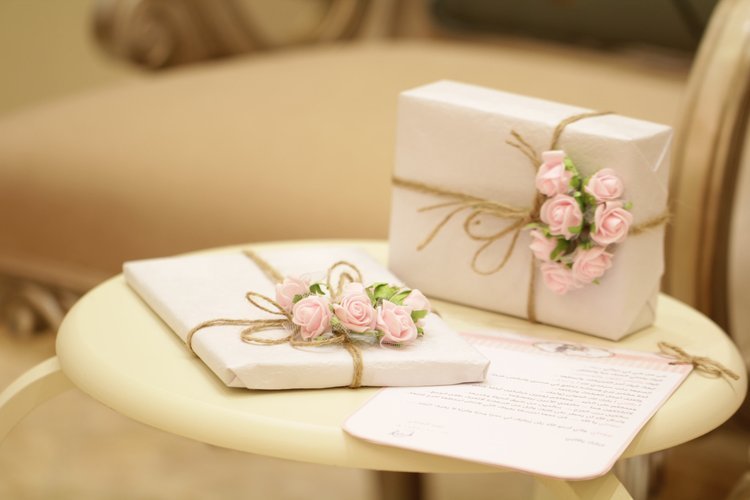
We prepare non-extravagant baskets of fruit, sweets, or flowers and plants for family, friends, neighbors, teachers, and helpers. We will attach a simple note explaining Ramadan if they’re non-Muslim.
This teaches children generosity, gratitude, and how to share their service and money as a charity in Ramadan.
They can also take some snacks or small toys to the masjid to hand out to young kids at tarawih or make some cupcakes to take to the masjid’s community iftaars.
Our kids also add coins from their moneyboxes into the charity boxes at the masjid at the end of Ramadan. They exchange small gifts with siblings and family members, learning generosity and thoughtfulness.
10. Learn About the Moon Phases
We teach our children about the phases of the moon using simple printouts and educational videos. Over time, they begin recognizing and naming the phases themselves and learning how the Islamic months start and the importance of sighting the moon for Ramadan and Eid.
We’ve also used moon-phase learning tools, some of which double as nightlights, so they're decorative and useful for a child’s bedroom.
Ramadan with little ones doesn’t need to be elaborate. It needs to be loving, intentional, and joyful. So I hope some of the ideas I shared will help you create meaningful Ramadan memories with your kids, inshallah.
Salam, I’m Zakeeya!
I believe that making our homes a safe haven for our families, as well as being a wife and mother, brings us great blessings, contentment, and benefits to society as a whole. Since 2011, I've been dedicated to assisting Muslimas in finding tranquility in their roles, taking better care of themselves, and achieving inner peace. Our journey in this world is not an easy one, but I pray the tools and guidance I offer will help you face life's challenges with more gratitude and mindfulness. Join me as I share wifehood, motherhood, homemaking, and lifestyle solutions that make life more fulfilling for you as a woman! Read more about me here.
Make Your Ramadan Run Smoothly!
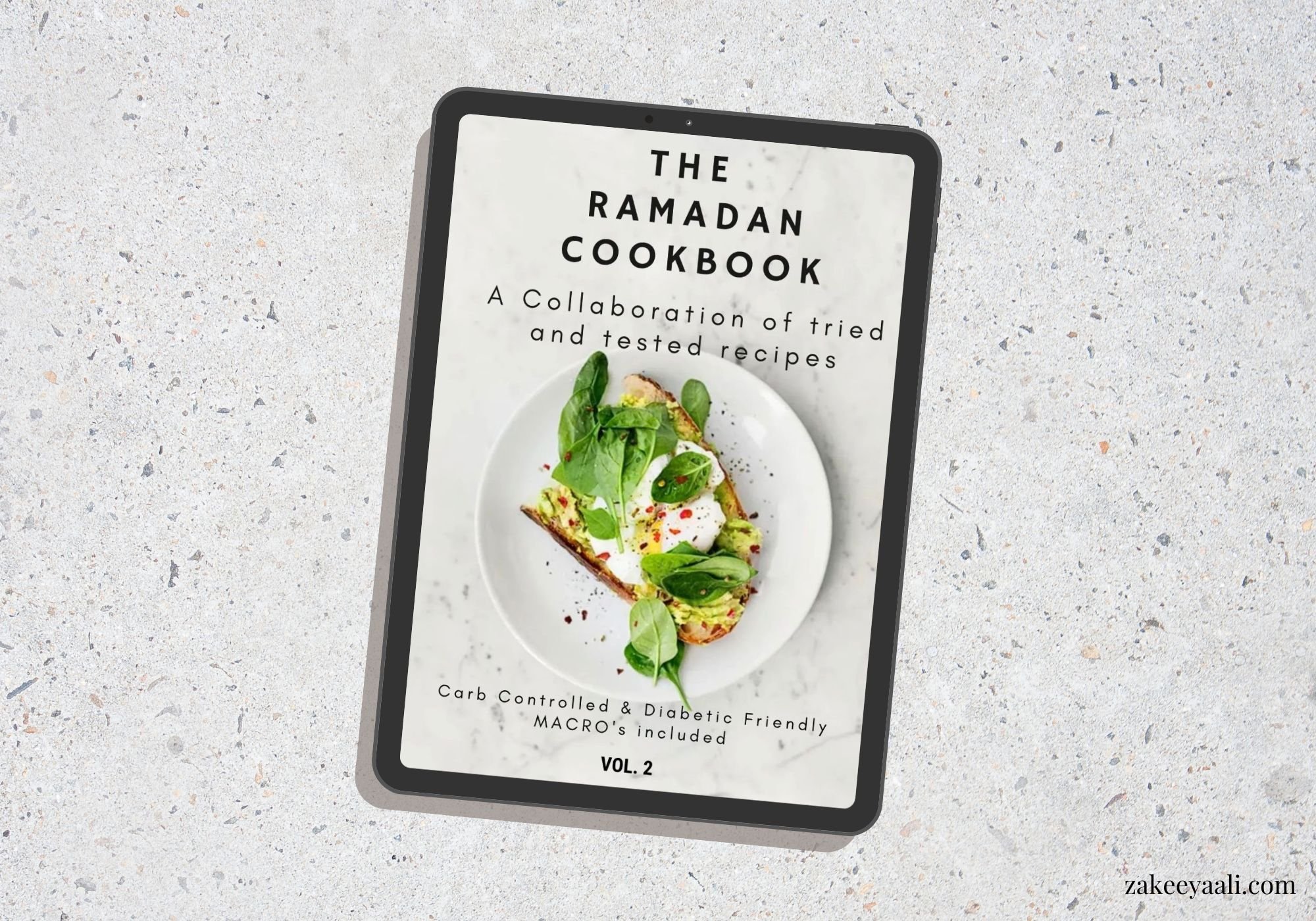
Get Your Guide to a Healthy Ramadhan, a 135-page guide including 100+ recipes for Ramadan, and The Ramadan Cookbook, a 70-page cookbook filled with healthier options for recipes with less badness and more goodness! Plus, when you buy one book, you’ll get 33% off the second book.

You May Also Like














This post contains affiliate links, which help offset website expenses. It costs nothing to use, but your support is so appreciated!